Ask ten engineers for “the best insulation,” and you will get ten answers. That is because there is no single best material. The right choice depends on one thing above all: the temperature of the system you are insulating.
A steam header at 400°C, a chilled water line at 6°C and an LNG pipe at -160°C fail in completely different ways. Hot lines waste energy and burn hands. Cold lines pull moisture out of the air, sweat, ice up, and corrode. Get the material wrong, and you pay for it in fuel, downtime, and corrosion repairs.
This guide splits industrial systems into clear temperature bands and shows which insulation works best in each one, with real data from Armacell’s technical documents.
Quick answer:
- High temperature (above about 110°C, up to 650°C): a flexible aerogel blanket such as Armacell ArmaGel XGH or ArmaGel HT gives the lowest heat loss at the thinnest thickness.
- Cold and chilled systems (-50°C to +110°C): closed-cell elastomeric foam such as ArmaFlex Ultima controls condensation and vapour.
- Cryogenic and LNG (down to -180°C): ArmaFlex Cryogenic Systems with ArmaFlex LTD, or an aerogel blanket such as ArmaGel XGC or DT.
- Dual-temperature lines that cycle hot and cold (-180°C to +250°C): ArmaGel XGC or ArmaGel DT.
Why temperature changes everything
Hot and cold systems need insulation for opposite reasons.
On hot systems, heat flows outward. The job of the insulation is to keep energy in the pipe, hold process temperatures steady and keep the outer surface safe to touch. The biggest risks are heat loss, high surface temperatures and corrosion under insulation (CUI) when water gets trapped against warm steel.
On cold systems, heat flows inward and so does moisture. Warm, humid air is drawn toward the cold pipe. If water vapour reaches the steel, it condenses, then freezes or corrodes. So for cold work, a tight vapour barrier matters as much as thermal performance.
On dual-temperature systems, the line swings between hot and cold, sometimes daily. The insulation must survive both conditions and the expansion and contraction in between without cracking.
That is why most engineers think in temperature bands:
| Band | Typical range | Typical systems | Main risk |
|---|---|---|---|
| High temperature | +110°C to +650°C | Steam, hot oil, process lines, vessels | Heat loss, burns, CUI |
| Dual temperature | -180°C to +250°C | Lines that cycle hot and cold, regeneration lines | Thermal cycling, CUI |
| Cold and chilled | -50°C to +110°C | Chilled water, refrigeration, HVAC | Condensation, vapour ingress |
| Cryogenic | Down to -180°C | LNG, liquefied gases, cold process | Ice, vapour ingress, cracking |
Best insulation for high-temperature systems
For hot pipes, vessels and ducts up to 650°C, flexible aerogel blanket is the strongest performer available today. Armacell offers two main options.
ArmaGel HT and ArmaGel XGH
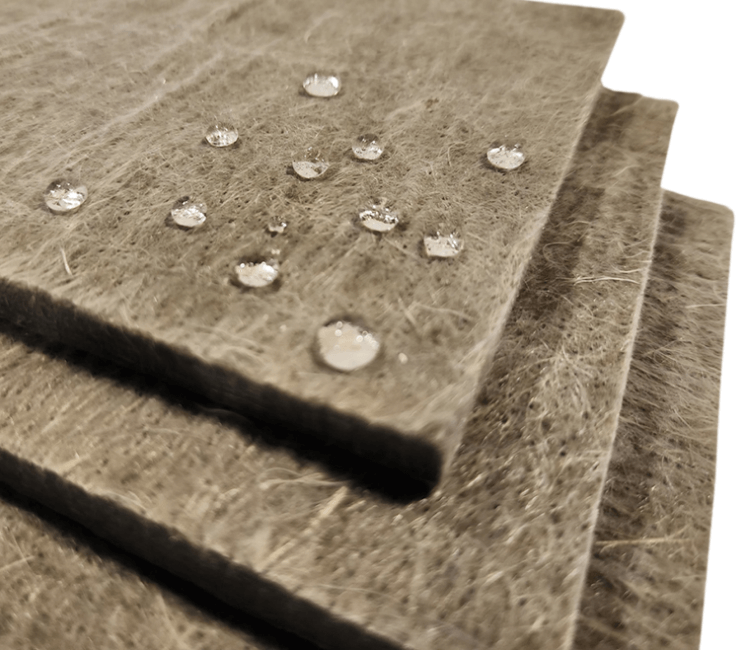
ArmaGel HT is a flexible aerogel blanket rated up to 650°C. Its declared thermal conductivity starts at 0.021 W/(m·K) at 24°C and is still only 0.043 W/(m·K) at 371°C. It is hydrophobic, has a nominal density of 180 kg/m³ and comes in 5, 10, 15 and 20 mm thicknesses.
ArmaGel XGH is the next-generation version for the same 650°C service. It also meets IOGP S-738 (JIP33), the oil and gas industry’s harmonised insulation specification. We cover it in detail in our article on calcium silicate vs aerogel insulation.
Why aerogel works so well on hot lines:
- Much thinner: Armacell reports ArmaGel can be up to 80% thinner than expanded perlite for the same thermal performance at 300°C on a 6-inch pipe
- Repels water: the hydrophobic blanket helps keep steel drier, which supports CUI control
- Flexible: wraps elbows, tees, valves and flanges without cutting rigid sections
- Lighter systems: less material and smaller jacketing diameters reduce load on supports
One practical note from Armacell’s documents: above 400°C, a thin metal foil barrier should be added to the build-up. Always follow the application manual for very hot service.
Where it fits
Steam and condensate lines, hot oil, refinery and petrochemical process piping, heat exchangers, reactors, turbine and exhaust ducts, and offshore modules where space and weight are tight.
Best insulation for low-temperature and cryogenic systems
On cold systems, the winning material is the one that keeps both heat and moisture out. Armacell covers this range with two families: closed-cell elastomeric foam and aerogel.
Cold and chilled systems: ArmaFlex Ultima
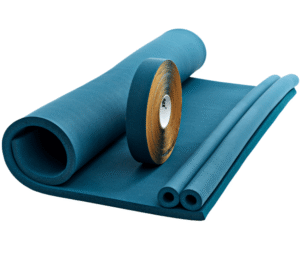
For chilled water, refrigeration and HVAC lines, ArmaFlex Ultima is a strong choice. It is a closed-cell elastomeric foam rated from -50°C to +110°C, with thermal conductivity of 0.040 W/(m·K) or less at 0°C.
Its key strength is a water vapour diffusion resistance factor (μ) of at least 7,000. In simple terms, the material itself acts as a vapour barrier, so you do not depend only on a separate foil layer. It is also FM approved and IMO compliant, with very low smoke density in a fire. Read more about the technology behind it in our article on ArmaPrene.
Cryogenic systems: ArmaFlex Cryogenic Systems with ArmaFlex LTD
For LNG and liquefied gas lines, ArmaFlex Cryogenic Systems combine ArmaFlex, ArmaFlex LTD and an outer cladding of metal or UV-cured GRP. The system is rated down to -180°C.
The inner layer, ArmaFlex LTD, is the part that makes cryogenic service possible:
- Stays flexible at very low temperatures, which reduces the risk of cracking
- Thermal conductivity of 0.021 W/(m·K) or less at -165°C
- Water absorption of 0.2% by volume or less
- Low leachable chlorides (80 ppm or less) to help mitigate corrosion
- Upper limit of +125°C, so lines can still be steam-cleaned
Cryogenic and dual-temperature systems: ArmaGel XGC and ArmaGel DT
Where space is tight, or the line cycles between hot and cold, an aerogel blanket is the better fit. ArmaGel DT is rated from -180°C to +250°C. Its thermal conductivity is 0.015 W/(m·K) or less at -129°C, and it comes with an integrated zero-perm vapour barrier. It is hydrophobic and available in 5, 10, 15 and 20 mm thicknesses.
ArmaGel XGC is the next-generation aerogel for the same -180°C to +250°C range and stays flexible at cryogenic temperatures. We explain how it compares with XGH in our article on aerogel insulation for energy facilities.
Quick selection guide: which Armacell insulation for which temperature
Start from your operating temperature, then confirm the choice against space, moisture and fire requirements.
| Operating temperature | Recommended Armacell solution | Type | Best for |
|---|---|---|---|
| +250°C to +650°C | ArmaGel XGH or ArmaGel HT | Aerogel blanket | Steam, hot oil, process piping, vessels, ducts |
| +110°C to +250°C | ArmaGel XGH or ArmaGel HT | Aerogel blanket | Hot lines where space or CUI is a concern |
| Cycles between hot and cold | ArmaGel XGC or ArmaGel DT | Aerogel blanket | Dual-temperature and regeneration lines |
| -50°C to +110°C | ArmaFlex Ultima | Closed-cell elastomeric foam | Chilled water, refrigeration, HVAC |
| Down to -180°C | ArmaFlex Cryogenic Systems (with ArmaFlex LTD) | Multi-layer elastomeric foam | LNG and liquefied gas pipework, tanks |
| Down to -180°C, tight space | ArmaGel XGC or ArmaGel DT | Aerogel blanket | LNG lines, offshore cryogenic piping |
These ranges come from Armacell’s published data. The right product and thickness for your project should always be confirmed with a heat loss or condensation calculation.
Six things to check before you choose
Temperature narrows the options. These six checks help you pick the final one.
- Thermal conductivity across your range. Look at the value at your actual mean temperature, not just the headline figure at 24°C. Conductivity rises with temperature for every material.
- Moisture and vapour control. On hot lines, you want a material that repels liquid water. On cold lines, you need a high vapour diffusion resistance or a zero-perm barrier, because one small gap can let condensation in.
- CUI risk. Coastal plants, wash-down areas and lines that cycle in temperature are the most exposed. Hydrophobic aerogel and closed-cell foam both help, but good jacketing, sealing and inspection are still essential.
- Fire performance. Check the reaction-to-fire class and any project requirements such as FM approval, IMO compliance or low smoke in occupied areas.
- Space and weight. On crowded pipe racks, offshore modules and brownfield revamps, a thinner system can be the difference between fitting and not fitting.
- Installation and lifecycle cost. Flexible materials fit fittings faster than rigid sections. Weigh the purchase price against energy, labour, jacketing and maintenance over the life of the plant.
Why this matters in Saudi Arabia and the GCC
Gulf conditions are hard on both ends of the temperature scale. On hot lines, high ambient heat and coastal humidity speed up CUI. On cold lines, the same humid air carries a lot of moisture toward the pipe, so a weak vapour barrier fails fast. Add the region’s growing LNG, petrochemical and district cooling projects, and the right insulation choice has a direct effect on energy use and plant reliability.
Get Armacell insulation through GITCO in Saudi Arabia
GITCO (Global Innovation Contracting Co.) is an authorised Armacell distributor in Saudi Arabia and Bahrain, with its head office in Dammam. We supply Armacell solutions for the full temperature range, from ArmaGel aerogel blankets for hot service to ArmaFlex for chilled and cryogenic systems.
- Local stock in KSA to cut lead times on projects and shutdowns
- Genuine Armacell product with certificates and test reports for your approvals
- Technical support on product selection, thickness, layer build-ups and jacketing
- Regional reach with offices in Saudi Arabia, Bahrain and the UAE
Frequently asked questions
What is the best insulation for high-temperature pipes?
For hot service up to 650°C, a flexible aerogel blanket such as Armacell ArmaGel XGH or ArmaGel HT gives the lowest heat loss for a given thickness. ArmaGel HT has a thermal conductivity of 0.021 W/(m·K) at 24°C and 0.043 W/(m·K) at 371°C.
What is the best insulation for cryogenic and LNG pipes? ArmaFlex Cryogenic Systems with ArmaFlex LTD are rated down to -180°C and stay flexible in the cold. Where space is tight, aerogel blankets such as ArmaGel XGC or ArmaGel DT cover -180°C to +250°C.
What insulation is used for dual-temperature systems?
ArmaGel XGC and ArmaGel DT are designed for lines that cycle between cryogenic and hot conditions, from -180°C to +250°C.
What is the best insulation for chilled water and HVAC lines?
Closed-cell elastomeric foam such as ArmaFlex Ultima, rated from -50°C to +110°C. Its high vapour diffusion resistance (μ of 7,000 or more) helps prevent condensation.
Why does cold insulation need a vapour barrier?
Warm, humid air moves toward a cold surface. Without a vapour barrier, moisture condenses inside the insulation, which reduces performance and can lead to ice and corrosion.
Can one insulation cover both high and low temperatures?
Not across the full range. Aerogel blankets cover the widest span, but hot service up to 650°C (XGH, HT) and cryogenic or dual-temperature service (XGC, DT) still need different products.
Where can I buy Armacell insulation in Saudi Arabia?
GITCO in Dammam is an authorised Armacell distributor in Saudi Arabia and Bahrain. Contact info@gitco-sa.com for stock and quotations.
Conclusion: match the insulation to the temperature
The best insulation is the one built for your operating temperature. For hot service up to 650°C, aerogel blankets such as ArmaGel XGH and HT deliver the lowest heat loss at the thinnest thickness. For chilled and HVAC systems, ArmaFlex Ultima controls vapour and condensation. For LNG and cryogenic lines, ArmaFlex Cryogenic Systems or ArmaGel XGC and DT keep the cold in and the moisture out.
Get that match right, and you save energy, protect your steel from CUI and avoid costly re-insulation later.
Not sure which product fits your system? Send GITCO your operating temperature range, pipe or equipment sizes, location (indoor, outdoor or offshore), and estimated quantity. Our team will recommend the right Armacell solution and prepare a quotation.
Contact GITCO | Email: info@gitco-sa.com | Phone: +966 13 833 1753