Cold rooms are essential for industries such as food storage, pharmaceuticals, hospitality, logistics, and industrial processing. In Saudi Arabia’s extreme climate, proper cold room insulation—especially insulated pipes—is crucial to prevent energy loss, condensation, and system failure.
Table of Contents
Why Pipe Insulation Is Critical in Cold Rooms
Insulated pipes help maintain consistent low temperatures while preventing:
- Condensation and moisture ingress
- Ice formation on chilled pipes
- Energy loss and increased power consumption
- Corrosion under insulation (CUI)
Without proper insulation, cold rooms experience higher operating costs and reduced equipment lifespan.
Best Insulation Materials for Cold Room Pipes
The most effective insulation materials for cold room applications include:
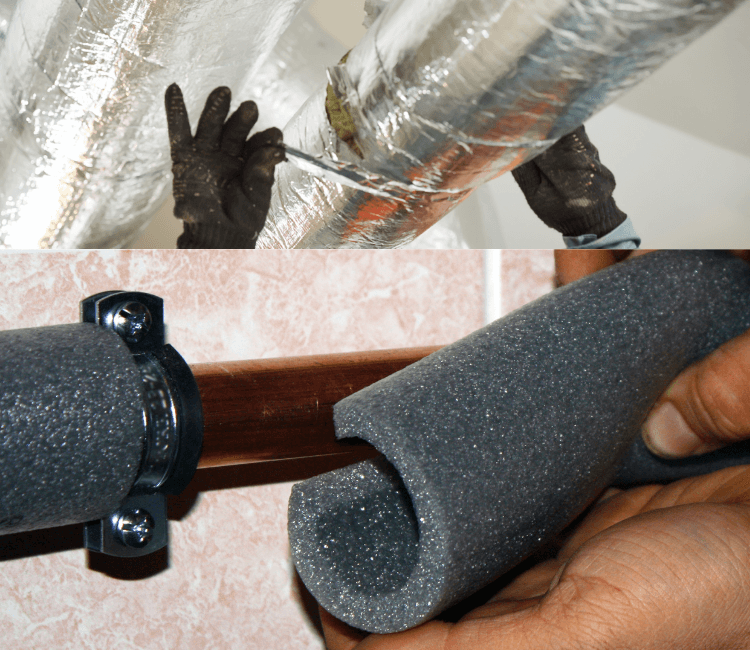
1. Closed-Cell Elastomeric Insulation
Ideal for chilled water and refrigeration pipes due to excellent vapor resistance and flexibility.
2. Foam Glass (Cellular Glass)
A premium solution for industrial cold rooms, LNG facilities, and cryogenic piping. It offers zero water absorption and high compressive strength.
3. Polyurethane (PU) & PIR Insulation
Widely used in cold rooms for superior thermal resistance and long-term durability.
4. Rockwool with Vapor Barriers
Used where fire resistance and acoustic performance are also required.
Benefits of Proper Cold Room Pipe Insulation
- Reduced energy consumption
- Stable temperature control
- Extended system life
- Compliance with Saudi building and industrial standards
- Lower maintenance costs
Gitco’s Cold Room Insulation Solutions
Gitco supplies and supports high-performance cold insulation systems for insulated pipes, cold rooms, and refrigeration facilities across Saudi Arabia. Our solutions meet international standards and are trusted by MEP contractors, consultants, and industrial clients.
Know more about Insulation for Pipes:
- What is the main goal of insulating pipes in a cold room?
The main goal is to prevent heat gain from the ambient environment into the cold fluid (to save energy) and, critically, to keep the insulation surface above the dew point to prevent condensation and ice formation. - Why is condensation a critical problem in cold insulation systems?
Condensation leads to water ingress into the insulation material, significantly increasing its thermal conductivity (λ), causing the system to lose efficiency and eventually leading to Corrosion Under Insulation (CUI). - What material property is most important for cold insulation pipe materials?
High resistance to water vapor transmission and low thermal conductivity (low λ) are the most critical properties. - What is a “thermal bridge” in the context of cold piping?
A thermal bridge is any part of the insulation system (like a metal pipe support) that creates a direct, high-conductivity path for heat to bypass the insulation, causing localized ice and condensation problems. - What is the required temperature range for insulation in a typical cold room?
The temperature range usually covers systems from just below ambient (like 10 °C chilled water) down to -40 °C or lower for deep-freeze storage.
- What are the top three materials considered the “best” for cold pipe insulation?
The best materials are typically Cellular Glass (Foam Glass), Polyisocyanurate (PIR) foam, and Flexible Elastomeric Foam (FEF). - Why is Cellular Glass often specified for critical cold pipes (e.g., ammonia)?
Cellular Glass is 100% inorganic and has an absolutely closed-cell structure, making it impervious to moisture and non-combustible, guaranteeing long-term thermal performance. - What is the main advantage of PIR/PUR foam?
PIR offers one of the highest R-values per inch (lowest λ) among rigid foam insulators, making it extremely thermally efficient for minimal thickness. - What is the main advantage of Flexible Elastomeric Foam (FEF)?
FEF is highly flexible, making it ideal for complex geometries and tight spaces, and it has a high built-in water vapor diffusion resistance (μ value). - Why are traditional fiberglass or mineral wool blankets generally avoided for cold pipes?
Fibrous materials are open-cell and are highly susceptible to moisture ingress and collapse when the vapor barrier fails, leading to severe ice formation.
- What is the typical λ value requirement for cold pipe insulation?
The thermal conductivity must be very low, often ≤ 0.040 W/(m·K) at 20 °C, with the best rigid foams being ≤ 0.030 W/(m·K). - What is the importance of the material’s μ value (water vapor diffusion resistance factor)?
A high μ value means the material is intrinsically resistant to water vapor passing through it, a crucial defense against internal condensation. - What standard governs the performance of Cellular Glass?
Cellular Glass must conform to the ASTM C552 standard. - What standard is relevant for rigid foam insulation like PIR/PUR?
Rigid insulation is often specified according to ASTM C591 (for cellular polyurethane and polyisocyanurate). - What is the required compressive strength for cold pipe insulation?
While FEF is soft, rigid materials like PIR and Cellular Glass need high compressive strength to resist the weight of the jacketing and potential external loads, especially for pipe supports.
- How is the vapor barrier managed around the insulation?
A continuous, unbroken vapor barrier (often an Aluminum Foil/Kraft Paper jacket or specialized coating) must be applied externally and sealed at all seams and joints using mastics and adhesives. - What is used to insulate pipe supports in a cold room?
High-density, load-bearing materials like High-Density PIR (HDPIR) or Cellular Glass blocks are used at supports to prevent thermal bridging and handle the compressive load. - What type of jacketing is typically used over the insulation?
Metal jacketing (Aluminum or Stainless Steel) is commonly used to protect the vapor barrier and the insulation from mechanical damage and UV exposure. - How are joints and seams sealed to prevent vapor ingress?
Joints are sealed by overlapping the jacket, applying cryogenic/vapor barrier mastic at the seams, and often banding the joints for compression. - What is the consequence of selecting the wrong insulation thickness?
If the insulation is too thin, the surface temperature will drop below the dew point, leading to condensation and ice formation, undermining the entire cold room system’s efficiency.