An HVAC system is only as efficient as its ductwork. Insulation for supply and return air ducts plays a critical role in maintaining air temperature, minimizing energy losses, and improving overall system performance. In Saudi Arabia’s extreme climate, duct insulation is not an option it’s a necessity.
At Gitco, we provide high quality duct insulation solutions designed to enhance HVAC efficiency while meeting local building and energy standards.
Table of Contents
Why Supply & Return Air Duct Insulation Matters
Uninsulated or poorly insulated ducts can lose up to 30% of conditioned air before it reaches occupied spaces. Proper insulation helps to:
- Maintain supply air temperature
- Prevent heat gain in cooled air and heat loss in heated air
- Reduce HVAC load and energy consumption
- Improve indoor air comfort and system reliability
Uninsulated or poorly insulated ductwork creates several problems in our climate. When cool air travels through ducts exposed to hot attic spaces or exterior walls, significant temperature gain occurs before the air reaches its destination. This thermal transfer forces HVAC systems to work harder and run longer to maintain desired indoor temperatures, dramatically increasing energy consumption.
In buildings where ducts run through air-conditioned spaces, the temperature differential between duct surfaces and surrounding air creates condensation. This moisture accumulation leads to water damage, mold growth, reduced air quality, and structural deterioration over time.
Key Benefits of Proper Duct Insulation
1. Substantial Energy Savings
Energy efficiency represents the most compelling reason to invest in duct insulation. Studies indicate that uninsulated ducts can lose 25-40% of cooling energy before conditioned air reaches its destination. In a region where cooling costs comprise up to 70% of electricity bills, this waste translates to thousands of riyals or dirhams annually for commercial facilities and hundreds for residential properties.
Properly insulated ductwork maintains air temperature throughout its journey from the HVAC unit to each room. This thermal retention means your system achieves desired temperatures faster, runs for shorter cycles, and consumes significantly less electricity. Many facility managers report energy savings of 20-30% after implementing comprehensive duct insulation programs.
2. Enhanced Indoor Comfort
Temperature consistency throughout a building depends heavily on duct insulation quality. Insulated ducts deliver air at the intended temperature, eliminating hot spots and cold zones that plague buildings with inadequate ductwork protection.
Proper insulation also reduces noise transmission through ductwork. The materials used for thermal insulation naturally dampen sound, creating quieter indoor environments by minimizing the transmission of airflow noise and mechanical vibrations from HVAC equipment.
3. Condensation Prevention and Moisture Control
In the GCC’s humid coastal regions, condensation on cold ductwork surfaces poses serious concerns. When warm, humid air contacts cold duct surfaces, water droplets form, leading to dripping ceilings, water stains, and creating ideal conditions for mold and mildew growth.
Quality duct insulation with proper vapor barriers prevents surface temperatures from dropping below the dew point, eliminating condensation issues entirely. This protection preserves building integrity, maintains healthy indoor air quality, and prevents costly water damage repairs.
4. Extended HVAC System Lifespan
When ductwork loses substantial cooling energy, HVAC equipment must operate longer and more frequently to maintain comfortable temperatures. This increased workload accelerates wear on compressors, fans, and other mechanical components, shortening equipment lifespan and increasing maintenance requirements.
By maintaining air temperature and reducing system runtime, proper duct insulation decreases mechanical stress on HVAC components. This gentler operation extends equipment life, reduces breakdown frequency, and lowers long-term replacement costs.
5. Improved Indoor Air Quality
Uninsulated ducts in unconditioned spaces accumulate dust, debris, and potentially harmful particles that contaminate the air circulating through your building. Condensation on duct surfaces creates environments where biological contaminants thrive.
Sealed, insulated ductwork maintains cleaner air pathways, reduces particle infiltration, and eliminates moisture-related air quality issues. For healthcare facilities, schools, restaurants, and other spaces where air quality matters, this benefit proves invaluable.
Types of Duct Insulation Materials
Selecting appropriate insulation materials depends on duct location, operating temperatures, and specific application requirements:
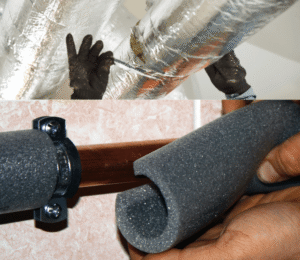
Fiberglass Insulation remains the most common choice for duct insulation. Available as rigid boards or flexible blankets, fiberglass offers excellent thermal resistance, fire safety, and cost-effectiveness. It works well for both supply and return ducts in most applications.
Elastomeric Foam Insulation provides superior moisture resistance and flexibility, making it ideal for complex ductwork configurations and humid environments. Its closed-cell structure prevents water absorption while delivering excellent thermal performance.
Polyethylene Foam offers lightweight insulation with good thermal properties and easy installation. It works particularly well for residential applications and smaller commercial systems.
Mineral Wool Insulation delivers exceptional fire resistance and acoustic dampening, making it preferred for industrial facilities and applications requiring enhanced safety standards.
Best Practices for Duct Insulation Installation
Effective duct insulation requires more than simply wrapping material around ductwork. Professional installation following industry best practices ensures optimal performance:
All duct surfaces exposed to temperature differentials require complete insulation coverage with no gaps or compressed areas. Seams and joints need careful sealing with appropriate tapes or mastics to prevent thermal bridging and air infiltration.
Supply ducts typically require higher R-values (thermal resistance ratings) than return ducts due to greater temperature differentials. In unconditioned spaces like attics, minimum R-6 insulation is recommended, while R-8 delivers even better performance in extreme climates.
Vapor barriers must face the appropriate direction based on climate conditions. In our cooling-dominated climate, vapor barriers should face outward to prevent warm, humid air from reaching cold duct surfaces.
Support systems must account for insulation weight and thickness, ensuring ducts remain properly aligned without sagging or stress on connections.
Special Considerations for Saudi Arabian, UAE and Bahrain Facilities
The Gulf region’s unique climate demands specific attention to duct insulation:
Extreme Heat Exposure: Ductwork in attics or roof spaces faces temperatures exceeding 70°C during summer months. Enhanced insulation with higher R-values becomes essential to combat this extreme heat gain.
Humidity Challenges: Coastal areas experience high humidity levels, making vapor barrier integrity critical for condensation prevention. Special attention to sealing and moisture protection ensures long-term performance.
Energy Codes and Standards: Saudi Arabia’s building codes and UAE green building standards increasingly mandate minimum insulation requirements for energy efficiency. Professional installation ensures compliance with these regulations.
Year-Round Cooling: Unlike temperate climates with seasonal heating and cooling, Gulf region HVAC systems operate almost continuously in cooling mode. This constant operation magnifies the impact of any duct inefficiencies, making quality insulation an essential investment rather than optional enhancement.
Measuring Insulation Performance
After installing duct insulation, several indicators help verify effectiveness:
Energy bills should show measurable reduction in consumption during the first billing cycle after installation. Temperature measurements at supply registers should closely match air handler output temperatures, indicating minimal thermal loss. Visual inspections should reveal no condensation on duct surfaces or surrounding areas.
Professional energy audits using thermal imaging cameras can identify any remaining thermal bridges or inadequately insulated sections, allowing for targeted improvements.
Return on Investment
While duct insulation requires upfront investment, the return typically comes quickly in our climate. Most commercial facilities recover installation costs through energy savings within 18-36 months. Residential properties often see payback in 2-4 years, with continued savings throughout the system’s lifespan.
Beyond direct energy savings, reduced maintenance requirements, extended equipment life, and improved comfort add significant value that enhances the overall return on investment.
Why Choose Professional Installation
While some property owners consider DIY duct insulation, professional installation through experienced contractors like Gitco delivers superior results. Our teams understand local climate challenges, building codes, and material selection appropriate for Gulf region conditions.
Professional installers ensure complete coverage, proper vapor barrier installation, code compliance, and warranty protection that DIY approaches cannot match. The modest additional cost for professional service pays dividends through optimized performance and long-term reliability.