
Getzner Wall Lining Brackets: Resilient Airborne Sound Reduction
Getzner Wall lining brackets provide resilient fixing for drywall and partitions, increasing airborne sound reduction by up to 4 dB compared to standard systems. Gitco-sa.com offers the complete range of these high quality, best isolation products across Saudi Arabia.
Description
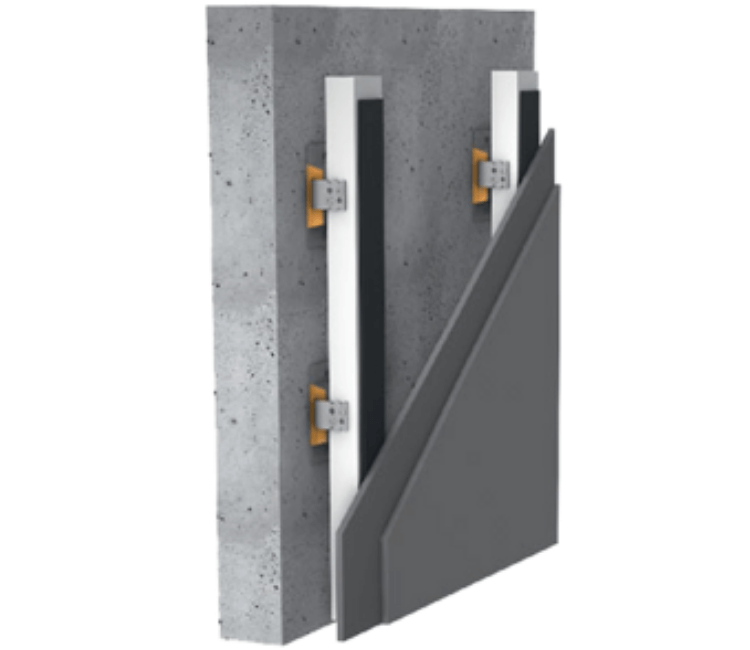
Getzner Wall lining brackets are purpose-designed components crucial for implementing high-performance acoustic solutions in dry construction. They utilise an elastic polyurethane element, typically made from Sylomer®, to create a resilient mounting between the structural wall and the subsequent wall lining (drywall or partition).
This essential decoupling prevents the rigid transmission of vibration and structure-borne noise, which significantly reduces the sound radiation into or out of adjoining rooms. The use of these brackets results in an airborne noise reduction index that is up to 4 dB higher than conventional attachment methods. Crucially, the effectiveness of the damping is maintained even in the challenging low frequency range (< 250 Hz), leading to a much higher standard of comfort in residential and commercial spaces.
Customised Products and Variations of Wall Lining Brackets
Gitco-sa.com offers the complete range of Getzner Wall lining brackets, tailored to different architectural and acoustic demands:
-
Customised Acoustic Requirements: Different brackets or elastomer hardnesses are available to match varying building acoustics requirements, ensuring targeted noise reduction and planning reliability.
-
Enhanced Damping: The brackets are engineered to achieve high damping efficiency, turning standard drywall into a sophisticated soundproofing insulation system.
-
Sustainable Quality: The polyurethane bearing elements are proven to be an advanced, sustainable solution with long-lasting efficacy, contributing value to all residential and commercial buildings.
Key Applications of Wall lining brackets
-
Residential Acoustics: Reducing noise pollution between apartments, especially in dense urban areas like Riyadh and Jeddah.
-
Office and Hospitality: Decoupling internal partitions in hotels, hospitals, and office blocks for increased privacy and superior acoustic comfort.
-
Dry Construction Systems: Used universally as the core fixing element for all resiliently mounted wall linings to enhance airborne sound reduction.
Our Wall lining brackets are recognized as the best isolation products, delivering high quality sound control solutions. Gitco-sa.com ensures the complete range is readily available for projects in Dammam, Al-Khobar, Al Jubail, Riyadh, Jeddah, and across Saudi Arabia.
Know more about Wall lining brackets :
-
What is a Getzner Wall Lining Bracket?
It is a bracket or mount (often referred to generically as a wall tie or elastic mount) used to fix an interior wall lining (like a drywall frame) to the structural wall while incorporating an elastic decoupling layer. -
What is the main purpose of the bracket?
Its primary function is to acoustically decouple the lining from the main wall structure to significantly reduce the transmission of airborne noise and structure-borne vibration into or out of adjoining rooms. -
What is the key elastic material used in the bracket?
The bracket incorporates high-performance polyurethane elastomers, typically Sylomer® or Sylodyn®, which provide high damping efficiency. -
How does the elastic element improve sound insulation?
The elastic bearing absorbs the vibrational energy that travels from the structural wall, preventing it from radiating effectively through the lining, thereby achieving a floating suspension effect. -
Are these brackets used in wet construction or dry construction?
They are mainly used in dry construction for mounting dry wall linings (e.g., gypsum plasterboard or wood panelling) onto existing walls. -
What level of noise reduction can the brackets achieve?
Using an elastic fixing system can improve the airborne noise reduction index of the wall lining by up to 4 dB compared to standard, rigid attachment systems. -
Is the performance effective across all sound frequencies?
Yes, the elastic mounting is designed to be effective, even in the low frequency range (e.g., below 250 Hz), which is critical for reducing bass and impact noise. -
Do they help reduce flanking sound?
While the primary use is for the direct wall, elastic decoupling of the lining is a key component in a comprehensive acoustic solution that helps mitigate flanking sound paths. -
Are there different types of wall lining brackets available?
Yes, variants exist (sometimes branded by partners as EP + Sylomer® mounts) with different metal designs and Sylomer® types to cater to various load requirements and application methods (e.g., M6 inserts, fixed pins). -
Do these brackets contribute to sound control in a “Box-in-Box” system?
Yes, they are an essential component of the highly effective “Box-in-Box” acoustic isolation concept, used to decouple all surfaces (floor, walls, and ceiling) of a sensitive room (e.g., recording studio). -
How are the brackets typically fixed to the structural wall?
They are generally fixed to the structural wall using screws or suitable fasteners through the rigid part of the metal bracket, with the elastic Sylomer® element facing outwards to receive the lining frame. -
What is the typical load capacity of a single wall lining bracket?
The brackets are designed for relatively light loads, with some models specified for a maximum load capacity of around 30 kg per mount. -
How far apart should the brackets be spaced?
Spacing is determined by the specific lining system and acoustic requirements, but typical recommendations suggest a maximum spacing (e.g., 600mm to 800mm) to ensure the lining is fully supported and properly decoupled. -
Is it necessary to maintain a cavity with the brackets?
Yes, the brackets are designed to maintain an air gap/cavity between the structural wall and the acoustic lining, which is crucial for maximising low-frequency sound absorption. -
Can the brackets be used for ceilings as well?
Similar elastic mounts and hangers (like Getzner’s Ceiling Hangers/Isotop® products) are used for ceilings, employing the same principle of elastic decoupling. -
Are the brackets designed for simple and fast installation?
Yes, some variants, such as the EP 700, are designed for direct fixing, allowing for a simple and quick installation procedure without the need for additional threaded rods. -
What is the typical natural frequency of the decoupled system?
The brackets help to lower the natural frequency of the suspended lining system, typically aiming for values where the isolation is most effective against common building noise. -
Are the brackets “fail-safe”?
Many elastic metal mounts designed for acoustic suspension (including similar products by Getzner’s partners) feature a “fail-safe” rugged metal structure, which is overload-proof and prevents collapse. -
How do these solutions add value to a building?
Effective sound control and enhanced comfort significantly add value to residential apartments and commercial buildings, particularly those near noise sources.
Brand
Getzner




Reviews
There are no reviews yet.