
High-Performance SBS Damp Proof Course Membranes
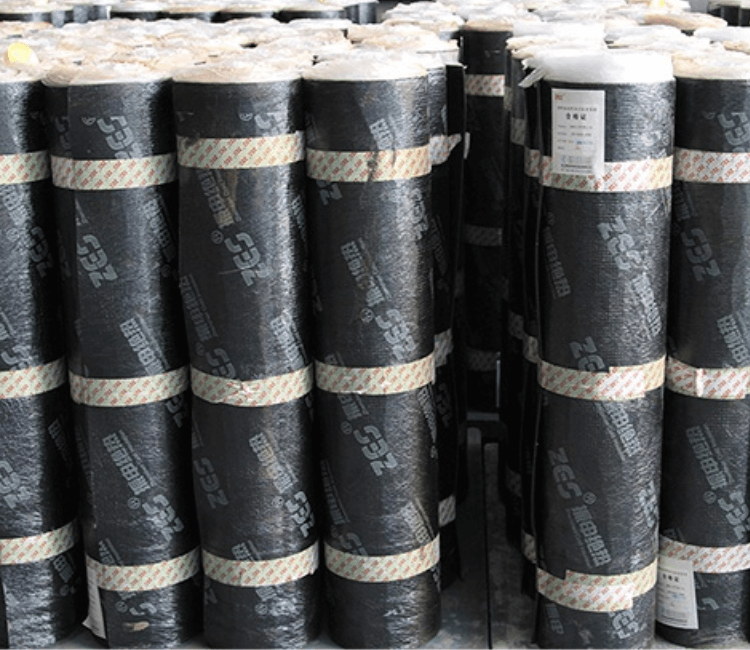
High-Performance SBS Damp Proof Course membranes are high quality bituminous rolls reinforced with polyester/glass fiber, offering exceptional elasticity and impermeability. They serve as the best isolation products for preventing rising damp and water ingress in critical structures. Gitco-sa.com supplies the complete range across Saudi Arabia.
Description
High-Performance SBS (Styrene-Butadiene-Styrene) Modified Bitumen Membranes are elastomeric waterproofing materials engineered for superior flexibility and durability, particularly in harsh environments like the KSA, where high heat and ground movement can stress building foundations. These membranes are created by dipping and coating a core reinforcement material with a modified bituminous compound.
The use of SBS polymer provides the bitumen with rubber-like characteristics, resulting in:
-
Exceptional Elasticity: High elongation and tensile strength (up to≥900 N/50 mm), allowing the membrane to accommodate significant structural movement, expansion, and contraction without cracking.
-
Superior Water Impermeability: Forms a monolithic, reliable seal, effectively protecting foundations, basements, and critical structures from water and rising damp.
-
Durability and Resistance: High resistance to aging, chemicals, and mechanical damage (anti-puncture), ensuring a long service life.
The term Damp Proof Course (DPC) specifically refers to its application as a barrier in masonry construction to prevent capillary action (rising damp) from the ground.
The Complete Range of SBS DPC Membranes
Gitco-sa.com offers a complete range of these high quality membranes, primarily categorized by their reinforcement core:
-
Polyester Felt Reinforced (PY): Utilizes non-woven spunbond polyester felt (e.g., 180 g/m²) for high tensile strength, elongation, and puncture resistance. Ideal for areas expecting structural settlement or high mechanical stress, such as foundation waterproofing and tanking.
-
Glass Fiber Felt Reinforced (G): Uses glass fiber felt for excellent dimensional stability and low elasticity. Primarily used for multi-layer systems as a base layer or in applications where stability is prioritized over movement accommodation.
-
Glass Fiber Reinforced Polyester Felt (PYG): Features a combination reinforcement offering the high tensile strength of polyester with the dimensional stability of glass fiber, providing a premium balance of properties for the most demanding applications, including bridge decks and specialized structural waterproofing.
-
Thickness and Finish: Available in various thicknesses (e.g., 3mm, 4 mm, 5 mm) and surface finishes (Polyethylene film for torch-on application, sand, or mineral aggregate for exposed top layers).
We guarantee that our SBS DPC membranes are the best isolation products for robust, long-lasting waterproofing. Gitco-sa.com ensures the complete range of these high quality materials is available across Dammam, Al-Khobar, Al Jubail, Riyadh, Jeddah, and all of Saudi Arabia.
Key Applications of SBS Damp Proof Course Membranes:
-
Damp Proof Course (DPC): Essential barrier installed in masonry walls (above ground level) to prevent rising damp.
-
Substructure Waterproofing: Tanking for basements and foundations (underground), retaining walls, and pile heads.
-
Roofing Systems: Used extensively for waterproofing flat and low-slope roofs in both new construction and refurbishment.
-
Wet Areas: Waterproofing layers beneath finishes in bathrooms, kitchens, and balconies.
-
Civil Engineering: Bridge decks, tunnels, and water retaining structures (e.g., water tanks, pools, concrete channels).
Know more about SBS Damp Proof Course Membranes:
1. Product Identity and Composition
- What is a high-performance damp proof course (DPC) membrane?It is a flexible, impermeable material installed horizontally in a building’s walls or floors to block the passage of moisture rising from the ground via capillary action (rising damp).
- What is the primary material base of these high-performance membranes?The base is high-quality bitumen (asphalt) that has been chemically modified with SBS (styrene-butadiene-styrene) synthetic rubber.
- What does the addition of SBS polymer achieve?SBS modification significantly enhances the bitumen’s properties, making the membrane much more flexible, elastic, and resistant to cold temperatures, thereby improving its durability and adhesion.
- What are the primary reinforcement materials used in the membrane?The bitumen compound is reinforced with high-strength materials like polyester felt, glass fiber felt, or a combination (glass fiber reinforced polyester felt).
- What is the function of the reinforcement material?The reinforcement provides the membrane with high tensile strength, puncture resistance, and dimensional stability, preventing tearing and distortion during installation and throughout its service life.
2. Technical Performance and Standards
- What is the typical thickness range for these high-performance membranes?The thickness of SBS modified DPC membranes typically ranges from 3 mm to 5 mm, offering robustness far superior to thin polythene DPCs.
- What is the key performance metric for DPC membranes?The key metric is impermeability or water tightness, measured by its ability to withstand hydrostatic pressure without leaking (e.g., meeting standards like EN 13969 or ASTM D6164).
- How do the membranes resist low temperatures?Due to the SBS modification, these membranes maintain their flexibility and will not crack or become brittle at low temperatures, ensuring long-term integrity in all climates.
- What is the expected service life of an SBS modified bitumen DPC?When properly installed, high-quality SBS membranes are designed to have a very long service life, often exceeding the life of the structure itself, due to their resistance to aging.
- Do these membranes also function as a vapor barrier?Yes, their continuous, impermeable bitumen composition provides an effective vapor barrier, preventing the transmission of moisture vapor from the ground into the structure.
3. Applications and Installation
- Where is the DPC membrane typically installed in masonry walls?It is installed horizontally on the foundation wall, typically 15 cm above the finished ground level, and below the lowest floor joist or slab, to stop capillary moisture rise.
- Can these membranes be used for tanking basements?Yes, due to their high performance and elasticity, SBS modified membranes are commonly used for the waterproofing (tanking) of underground basements and foundations.
- What is the common method for joining or overlapping the membranes?The most common method is torch-applied welding (heat fusion), where the exposed bitumen on the overlap is melted to form a continuous, monolithic, and fully watertight seam.
- How are the membranes secured to the substrate?In torch-applied systems, the bitumen is heated and fully bonded to the clean, primed concrete or masonry surface.
- Are these membranes used for waterproofing flat roofs?Yes, similar SBS modified bitumen membranes, often thicker or with mineral granules, are extensively used as a primary waterproofing layer for flat or low-slope roofs.
4. Commercial and Environmental Factors
- What does the “dip coating” process achieve?The dip coating ensures that the reinforcement material is fully saturated and embedded within the modified bitumen compound, providing maximum adhesion and preventing delamination.
- What standards typically govern the quality of the membrane?They must comply with relevant international standards, such as EN 13707 (for roofing) or EN 13969 (for waterproofing/DPC), ensuring quality and performance consistency.
- Are there different finished surfaces available for the membranes?Yes, the surface finish can vary, including sand, polyethylene film, or mineral granules (especially for roofing applications) to protect the bitumen layer.
- How are the membranes supplied?They are typically supplied in rolls of varying lengths (e.g., 10 m to 20 m) and standard widths.
- Why are high-performance DPCs particularly important in regions with high humidity?In regions with high humidity or high groundwater tables, a high-performance DPC is crucial to prevent structural dampness, mold growth, and related health/structural issues, ensuring the building’s long-term habitability and value.
Brand
Zhenshen Insulation
Zhenshen Insulation is a trusted global manufacturer recognized for delivering high-performance insulation solutions, particularly their advanced Cellular Glass (Foam Glass) products. As a supplier of Aramco and SABIC approved products, Zhenshen meets the rigorous quality, safety, and durability standards demanded by the largest industrial and energy corporations in the Kingdom of Saudi Arabia. All Zhenshen products comply with stringent ASTM standards, guaranteeing reliability for critical applications.
Zhenshen Cellular Glass Insulation (Foam Glass/Foamglas) is the cornerstone of their industrial offering, renowned for its:
-
Absolute Vapor Impermeability: The closed-cell structure makes it a definitive vapor barrier, preventing moisture migration and eliminating the risk of Corrosion Under Insulation (CUI), vital for long-term reliability in cold insulation and hot insulation systems.
-
Non-Combustibility: Being inorganic, it is inherently fireproof, providing a crucial safety layer in LNG tank, pipeline, and chemical processing environments.
-
High Compressive Strength: Its rigidity makes it ideal for high-load applications, including cryogenic tank bases and pipe supports, ensuring system integrity.
The Complete Range of Zhenshen Insulation Products
Gitco-sa.com supplies the complete range of high quality Zhenshen Insulation materials, ensuring compliance and availability for major projects:
-
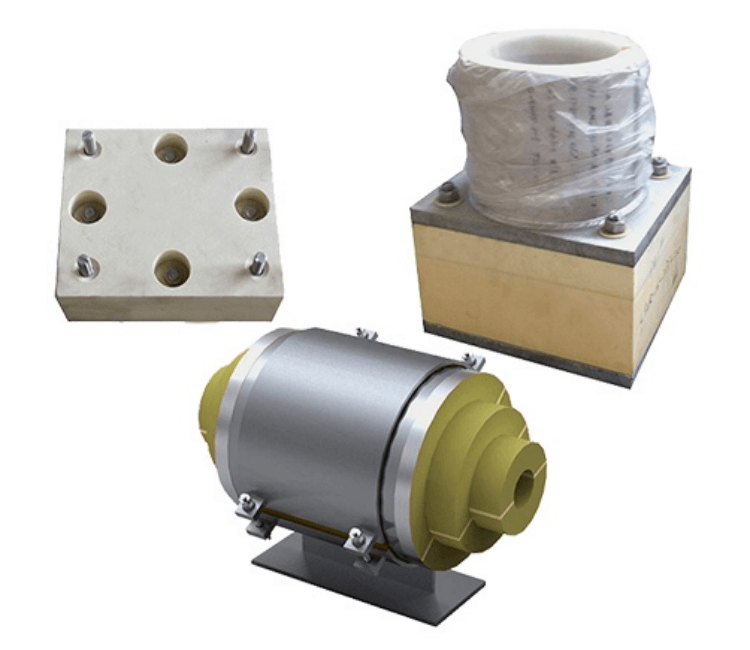
Cellular Glass Pipe Sections: Pre-formed insulation for pipeline insulation in LNG, cold, hot, and medium-temperature systems. Available for various pipe sizes and thicknesses, compliant with ASTM standards.
-
Foam Glass Slabs & Boards: Used for LNG tank bases (cryogenic systems), equipment, vessels, roof insulation, and wall insulation in industrial and commercial building insulation projects.
-
Tapered & Curved Sections: Custom Foam Glass segments for precise insulation of large vessels, tanks, and structural elements, ensuring thermal continuity.
-
Specialized Industrial Grades: Products engineered specifically for the extreme conditions found in petrochemical and hydrocarbon processing systems, carrying the distinction of being Aramco and SABIC approved products.
We guarantee that our Zhenshen Insulation products are the best isolation products for achieving maximum durability and safety. Gitco-sa.com ensures the complete range of these high quality, Aramco and SABIC approved materials is available for delivery and project support in Dammam, Al-Khobar, Al Jubail, Riyadh, Jeddah, and across Saudi Arabia.
Key Applications
-
Industrial/Energy: LNG tank and cryogenic tank insulation, pipeline insulation (hot and cold), and process equipment in Hydrocarbon Processing and Chemical Processing Systems.
-
Building & Construction: Roof insulation, wall insulation, and structural insulation for commercial and industrial buildings requiring high fire ratings and moisture control.
-
Waterproofing: Used in conjunction with construction and roofing materials due to its zero-permeability.


Reviews
There are no reviews yet.